Wonderschool Child Care Micro-Facilities
The micro-facility model allows providers to open small, licensed child care centers, as extensions of their existing programs, thereby reducing costs while expanding access for families.


Innovative Solutions for State and local Government
The goal of the micro-facility model is to increase the availability of child care while ensuring the health and safety of children through streamlined regulations. Micro-facilities can be a distinctly innovative solution that sits between in-home child care and center-based child care.
Micro-facilities can launch quickly by using community spaces (e.g., libraries, shopping centers) that offer a cost-effective solution to child care shortages without long center buildout timelines.

Micro-facilities bring child care closer to where families live and work, making care more convenient and helping parents stay employed, and supporting local economies.

Micro-facilities are built on regulations tailored to smaller scale programs, helping providers lower costs while maintaining quality—making them a smart, sustainable investment for states and child care providers.

By allowing use of existing spaces and simplifying startup requirements, micro-facilities significantly reduce the financial barrier to opening a new child care site.

Micro-facilities leverage shared resources, such as staffing, marketing, and admin support, to minimize operating costs and create a more sustainable business.

Building Micro-Facilities in Indiana
Wonderschool has partnered with the State of Indiana to pilot a micro-facility model of care for existing providers in the state. The legislation for the micro-facility pilot was approved by the State as part of the Second Regular Session of the 123rd General Assembly (2024). Wonderschool led provider outreach, managed the application process, and is now supporting the implementation of micro-facility sites with six existing child care providers across the state.
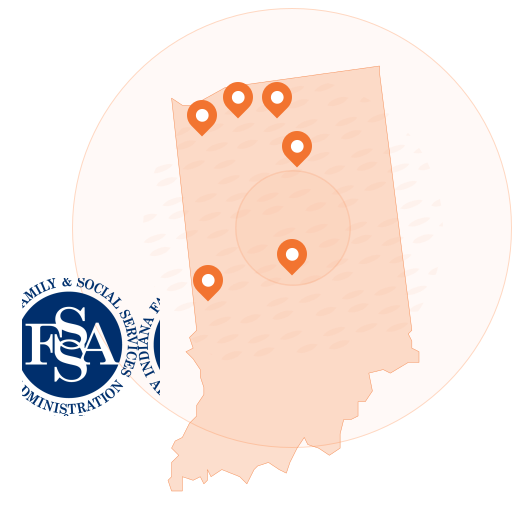
Historical project timeline (2026)

approved Providers


- Urban
- Micro-Facility Capacity: 19

- Urban
- Micro-Facility Capacity: 18
- Rural
- Micro-Facility Capacity: 30

- Urban
- Micro-Facility Capacity: 19
- Urban
- Micro-Facility Capacity: 19
- Rural
- Micro-Facility Capacity: 20
Get Started with Wonderschool
We’ll get back to you within 2 business days.

